

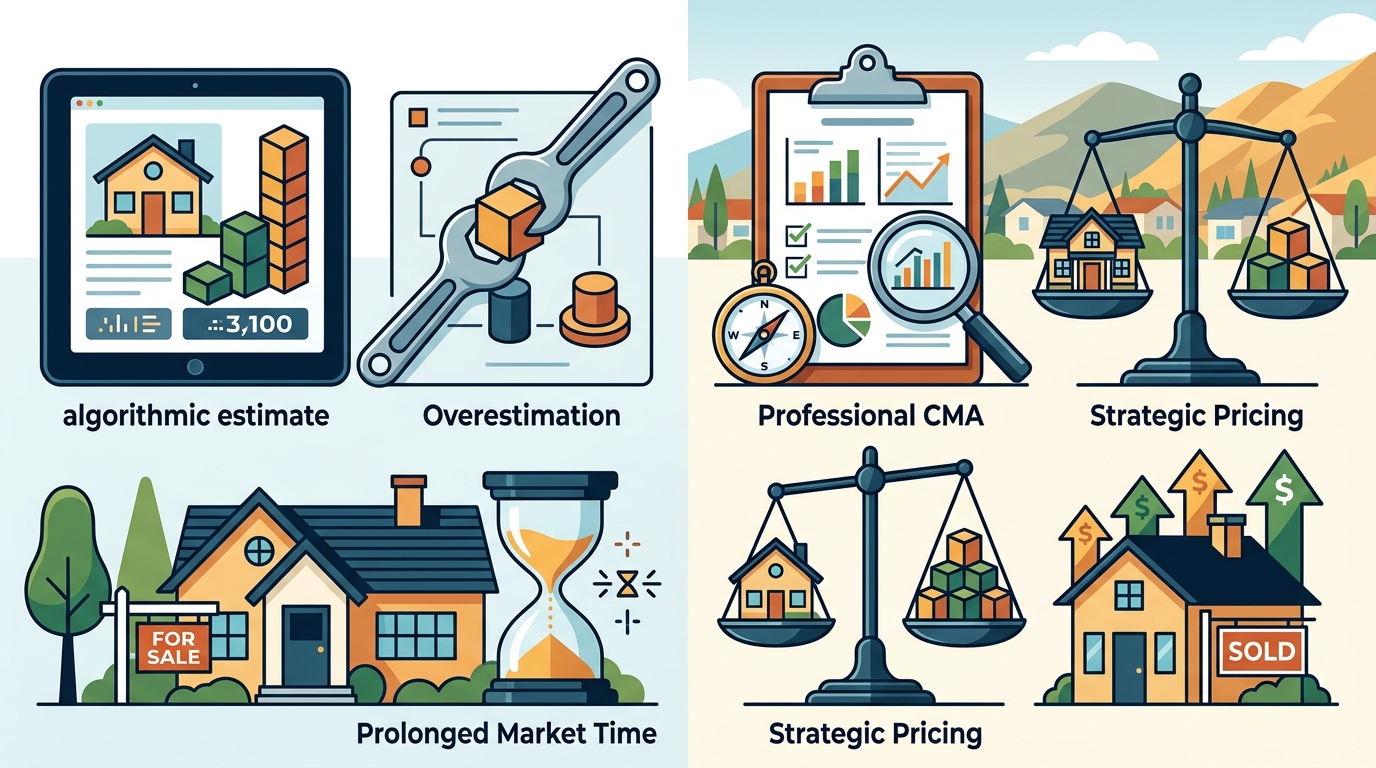
Home valuation is often the first step in a major financial transition, yet it remains one of the most misunderstood processes in real estate. According to recent industry data, nearly 40% of homeowners initially overestimate their property's value by more than 5% when relying on automated online tools. This discrepancy can lead to prolonged market time, reduced final sale prices, and unnecessary stress during the transaction. Understanding the gap between algorithmic estimates and true market value is critical for anyone looking to buy or sell in the current Southern California landscape.
Mistake 1: Relying Solely on Automated Valuation Models
Automated Valuation Models (AVMs) are convenient, but they are not accurate appraisals. These algorithms pull public record data, such as square footage and bedroom count, but they cannot see the condition of the roof, the quality of the kitchen renovation, or the view from the backyard. AVMs are statistical estimates, not professional appraisals.
When you use a generic online calculator, you are getting a broad average based on limited data points. In a dynamic market like Rancho Cucamonga, these tools often lag behind real-time shifts in buyer demand. For instance, an AVM might not account for a recent spike in interest rates that has cooled buyer activity in specific neighborhoods. Relying on this number can set unrealistic expectations for sellers or cause buyers to miss out on competitive opportunities.
To avoid this, treat online estimates as a starting point for research, not a final answer. A Comparative Market Analysis (CMA) performed by a local expert considers active listings, pending sales, and expired listings to provide a nuanced view of your home's worth. This human-led approach captures the "feel" of the market that code cannot.
Mistake 2: Ignoring Local Market Micro-Trends
Real estate is hyper-local. A trend in downtown Los Angeles may have zero impact on property values in the Inland Empire. Many homeowners make the error of using regional or state-wide data to value their homes. This is a critical oversight because supply and demand dynamics vary significantly from street to street.
In Rancho Cucamonga, for example, proximity to top-rated school districts or specific community amenities can drive premiums that statewide averages completely miss. Local micro-trends dictate price per square foot variations. If you ignore these nuances, you risk pricing your home incorrectly relative to its immediate competitors.
Understanding the specific buyer profile for your neighborhood is essential. Are buyers in your area looking for luxury finishes, or are they prioritizing square footage and lot size? A local agent with deep community ties can identify these preferences and adjust your valuation strategy accordingly. This level of detail is often available through specialized community reports and local market analyses.
Mistake 3: Overestimating the Impact of Cosmetic Updates
Homeowners often believe that their recent cosmetic upgrades will translate dollar-for-dollar into increased home value. While updates like fresh paint or new flooring improve marketability, they rarely add full value to the appraisal. Cosmetic updates enhance appeal, not necessarily appraised value.
For example, a $20,000 kitchen remodel might not add $20,000 to the home's value if the rest of the house shows signs of deferred maintenance. Appraisers look at the overall condition and functionality of the home. If the roof is old, the HVAC system is outdated, or the foundation has issues, these structural factors will weigh more heavily than the new granite countertops.
To avoid this mistake, focus on "curb appeal" and neutral staging rather than assuming every renovation pays off. Prioritize repairs that affect the home's structural integrity and major systems. These are the factors that appraisers and serious buyers scrutinize most closely. A strategic approach to improvements ensures you are investing in value, not just aesthetics.
Mistake 4: Failing to Account for Comparable Sales Timing
Comparables, or "comps," are the cornerstone of any home valuation. However, using outdated sales data is a common and costly error. A home sold six months ago in a rapidly changing market may no longer be a relevant comparison. Market conditions shift quickly, making recent sales critical.
In 2024 and 2025, interest rate fluctuations have caused significant volatility in housing markets. A comp sold in a low-rate environment may not reflect current buyer purchasing power. If you use comps from a peak market period during a cooling phase, you will likely overprice your home. Conversely, using comps from a hot market during a slowdown might lead to underpricing.
Ensure that your valuation uses sales from the last 30 to 90 days. Look for homes that are truly comparable in size, age, condition, and location. The closer the comp is to your property in time and space, the more accurate your valuation will be. This requires real-time data access and expert analysis to filter out irrelevant sales.
Mistake 5: Neglecting Professional Staging and Presentation
Even with a perfect valuation, poor presentation can depress the perceived value of your home. Buyers make emotional decisions based on first impressions. A cluttered, dirty, or poorly lit home can feel smaller and less valuable than it actually is. First impressions heavily influence perceived value.
Professional staging helps buyers visualize themselves living in the space. It highlights the home's best features and minimizes its flaws. Without staging, buyers may struggle to see the potential of the property, leading to lower offers or complete disinterest. This is particularly true in luxury markets where presentation is a key differentiator.
Consider the cost of staging against the potential increase in sale price. In many cases, the investment pays for itself by reducing time on market and increasing final offers. A clean, well-lit, and neutrally decorated home appeals to a broader audience, creating a sense of value that aligns with your strategic pricing.
Key Takeaways
- AVMs are estimates: Online tools lack the nuance of condition and local context, often leading to 5%+ valuation errors.
- Local data is king: Regional averages do not reflect the specific supply and demand dynamics of neighborhoods like Rancho Cucamonga.
- Structure over style: Major systems and structural integrity weigh more heavily in appraisals than cosmetic updates.
- Recency matters: Use sales data from the last 30-90 days to account for current interest rate and market shifts.
- Presentation is value: Professional staging and cleanliness directly impact buyer perception and final offer amounts.
- Expert guidance is vital: A top-producing agent provides access to off-market data and strategic pricing insights.
- Market reports are essential: Regular updates help you stay informed about shifting trends in the Inland Empire.
Frequently Asked Questions
How accurate are online home valuation tools?
Online tools provide a general estimate based on public records but often lack accuracy due to their inability to assess property condition, recent upgrades, or local market nuances. They should be used as a preliminary reference only.
What is the best way to get an accurate home value?
The most accurate method is a Comparative Market Analysis (CMA) conducted by a local real estate professional. This involves analyzing recent sales of comparable homes in your immediate area, considering current market conditions and your home's specific features.
How do interest rates affect home valuation?
Interest rates directly impact buyer purchasing power. Higher rates typically reduce the number of qualified buyers, which can lower demand and home values. Valuations must account for current rate environments to be accurate.
Should I renovate before selling to increase value?
Focus on repairs that affect structural integrity and major systems. Cosmetic updates can improve marketability but rarely add full dollar-for-dollar value. Strategic staging is often a more cost-effective way to enhance perceived value.
How often should I check my home's value?
It is advisable to review your home's value quarterly, especially in volatile markets. Regular updates help you stay informed about shifting trends and adjust your strategy if you are planning to sell or refinance.
What are comparable sales (comps)?
Comps are recently sold properties similar to yours in size, age, condition, and location. They serve as the benchmark for determining your home's market value by providing a basis for comparison.
Why is local market knowledge important for valuation?
Local knowledge allows for the identification of micro-trends, school district impacts, and neighborhood-specific demand that national or regional data misses. This precision is critical for accurate pricing.
Get Your Accurate Home Value Estimate
Navigating the complexities of home valuation requires more than just data; it requires expertise, local insight, and strategic negotiation. Whether you are considering selling, refinancing, or simply understanding your equity, getting the valuation right is the foundation of your success. Dina Anderson, a top-producing agent in Rancho Cucamonga, offers personalized market analyses tailored to your specific property and goals.
Don't rely on guesswork. Visit dinaanderson.com to schedule a consultation and receive a comprehensive, data-driven home value estimate. Connect with a professional who understands the Inland Empire market inside and out.