

Short Sale vs. Foreclosure: Which Is Better for Rancho Cucamonga Homeowners?
Financial distress in Southern California real estate often forces homeowners into difficult crossroads. According to recent housing market data, a significant percentage of distressed properties in the Inland Empire are resolved through negotiated settlements rather than bank-owned auctions. Understanding the difference between a short sale and a foreclosure is critical for protecting your credit score and future financial health. This guide breaks down the mechanics, timelines, and consequences of each path to help you make an informed decision.
Understanding the Basics
Before diving into the specifics, it is essential to define the core mechanisms at play. A short sale is a transaction where the lender agrees to accept less than the full mortgage balance to allow the property to be sold. This requires lender approval and is often a negotiated compromise to avoid the higher costs of foreclosure. In contrast, a foreclosure is a legal process where the lender takes possession of the property due to the borrower's failure to make payments. This process is initiated by the bank and follows strict state laws regarding notice and auction procedures.
The primary distinction lies in control. In a short sale, you, the homeowner, are still selling the home. You list the property, accept offers, and work with the bank to approve the final price. In a foreclosure, the bank controls the timeline and the sale, often resulting in a public auction that can drive prices down further. For Rancho Cucamonga residents, maintaining some level of control over the exit strategy can significantly impact the final outcome.
Credit Score Impact
Your credit score is likely the most immediate concern when facing financial hardship. Both options will negatively impact your credit, but the severity and duration differ. A short sale typically results in a credit score drop of 50 to 150 points, depending on your starting score and payment history. The negative mark remains on your credit report for seven years. However, many borrowers see their scores recover faster than those who go through foreclosure.
Foreclosure is far more damaging. It can cause a drop of 150 to 300 points or more. The stigma of a foreclosure on your credit report is heavier and lasts for the same seven-year period. Lenders view foreclosure as a higher risk indicator because it suggests a complete failure to manage the debt obligation. According to industry data, borrowers who have completed a short sale are often eligible for new mortgages sooner than those with a foreclosure record. This difference can mean the difference between buying a home in three years versus waiting seven.
Timeline and Process
Time is a critical factor in real estate transactions. A short sale is not a quick fix. It is a lengthy process that can take anywhere from three to six months, or even longer, depending on the complexity of the case and the responsiveness of the lender. The process involves listing the home, receiving an offer, submitting a hardship package to the bank, and waiting for approval. It requires patience and active participation from the homeowner.
Foreclosure timelines vary by state and loan type. In California, the process can take several months to over a year. It begins with a notice of default, followed by a notice of trustee's sale. Once the property is auctioned, the bank takes ownership. While the timeline might seem shorter in some cases, the uncertainty and lack of control make it a stressful experience. Homeowners in Rancho Cucamonga often find that the structured, albeit slow, process of a short sale provides more stability than the unpredictable nature of foreclosure proceedings.
Financial Consequences
One of the most significant financial risks in a short sale is the potential for a deficiency judgment. This occurs when the sale price is less than the total debt owed, and the lender seeks to recover the remaining balance. However, many lenders agree to forgive the deficiency as part of the short sale agreement. It is crucial to get this forgiveness in writing before closing the deal. In California, anti-deficiency laws provide some protection for primary residences, but this is not absolute for all loan types.
In a foreclosure, the risk of deficiency judgments can be higher, especially for second mortgages or home equity lines of credit. The bank may pursue legal action to collect the unpaid balance. Additionally, foreclosure can lead to tax implications. The IRS may consider forgiven debt as taxable income, although there are exceptions for primary residences under certain conditions. Consulting with a tax professional is essential to understand your specific liability. For more details on navigating these financial hurdles, you can explore guidance on short sales to understand the nuances of lender negotiations.
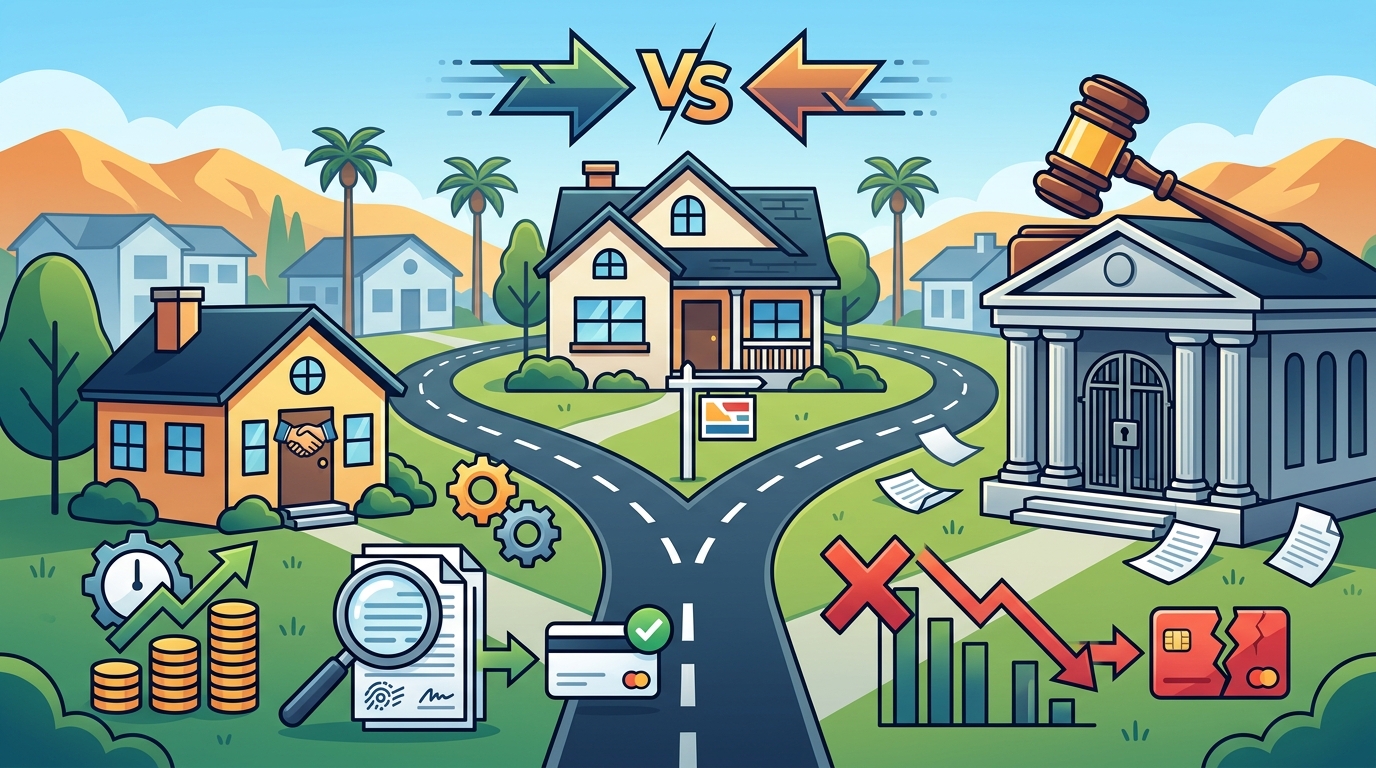
Rebuying Restrictions
How soon can you buy another home? This is a common question for homeowners who need to move on. After a short sale, you may be eligible for a new mortgage in as little as two to four years, depending on the loan type and your financial recovery. FHA loans, for example, have more flexible guidelines for short sale borrowers. Conventional loans may require a longer waiting period, typically two to seven years.
Foreclosure comes with stricter waiting periods. For FHA loans, the waiting period is seven years. For conventional loans backed by Fannie Mae or Freddie Mac, it is typically seven years as well. This means that if you choose foreclosure, you may be locked out of the homeownership market for a significant time. This restriction can force you into renting for longer than necessary, delaying your wealth-building journey. Understanding these timelines is vital for planning your future. You can learn more about qualifying for a home loan after a financial setback to better prepare your financial profile.
Decision Matrix
Choosing between a short sale and a foreclosure depends on your specific financial situation, credit profile, and long-term goals. The following table summarizes the key differences to help you evaluate your options.
| Factor | Short Sale | Foreclosure |
|---|---|---|
| Credit Score Impact | Drop of 50-150 points | Drop of 150-300+ points |
| Timeline | 3-6 months (negotiated) | Months to years (legal process) |
| Control | Homeowner controls sale | Lender controls sale |
| Rebuying Wait Time | 2-4 years (FHA/Conventional) | 7 years (FHA/Conventional) |
| Deficiency Risk | Can be negotiated/forgiven | Higher risk of judgment |
Key Takeaways
- Control Matters: A short sale allows you to sell the home, potentially preserving more value and dignity than a bank-owned foreclosure.
- Credit Recovery: Short sales generally result in less severe credit damage and faster recovery times compared to foreclosures.
- Timeline Reality: Short sales are not quick fixes; they require patience and active negotiation with lenders.
- Rebuying Power: You can likely buy a new home sooner after a short sale than after a foreclosure, accelerating your financial recovery.
- Deficiency Negotiation: Always seek written forgiveness of any remaining debt in a short sale to avoid future liability.
- Tax Implications: Forgiven debt may be taxable; consult a tax professional to understand your specific obligations.
- Professional Guidance: Navigating these complex processes requires expert knowledge of local laws and lender requirements.
Frequently Asked Questions
Is a short sale better than foreclosure?
Yes, in most cases, a short sale is better because it results in less credit damage, allows you to control the sale, and enables you to buy a new home sooner than after a foreclosure.
How long does a short sale take in Rancho Cucamonga?
A short sale typically takes three to six months, depending on the lender's responsiveness and the complexity of the financial package submitted.
Can I buy a house after a short sale?
Yes, you may be eligible for a new mortgage in as little as two to four years, depending on the loan type and your financial recovery.
What is a deficiency judgment?
A deficiency judgment is a legal claim by the lender to collect the remaining balance of the mortgage after the property is sold for less than the debt owed.
Do I have to pay taxes on forgiven debt?
Forgiven debt may be considered taxable income by the IRS, but there are exceptions for primary residences. Consult a tax professional for your specific situation.
How does foreclosure affect my credit score?
Foreclosure can cause a credit score drop of 150 to 300 points or more, and it remains on your credit report for seven years.
Can I negotiate the terms of a short sale?
Yes, you can negotiate terms such as the sale price, closing costs, and the forgiveness of deficiency balances with the lender.
Contact Dina Anderson for Expert Guidance
Navigating the decision between a short sale and a foreclosure requires expert guidance and a deep understanding of local market dynamics. Dina Anderson, a top-producing REALTOR® in Rancho Cucamonga, specializes in helping homeowners navigate these complex transactions with integrity and strategic precision. With a background in real estate finance and a commitment to client advocacy, Dina ensures you receive clear, confident direction from start to finish. Whether you are considering a short sale or need assistance with Apex Concierge Services, Dina is here to help you protect your future. Contact Dina Anderson today to schedule a consultation and take the first step toward financial recovery.